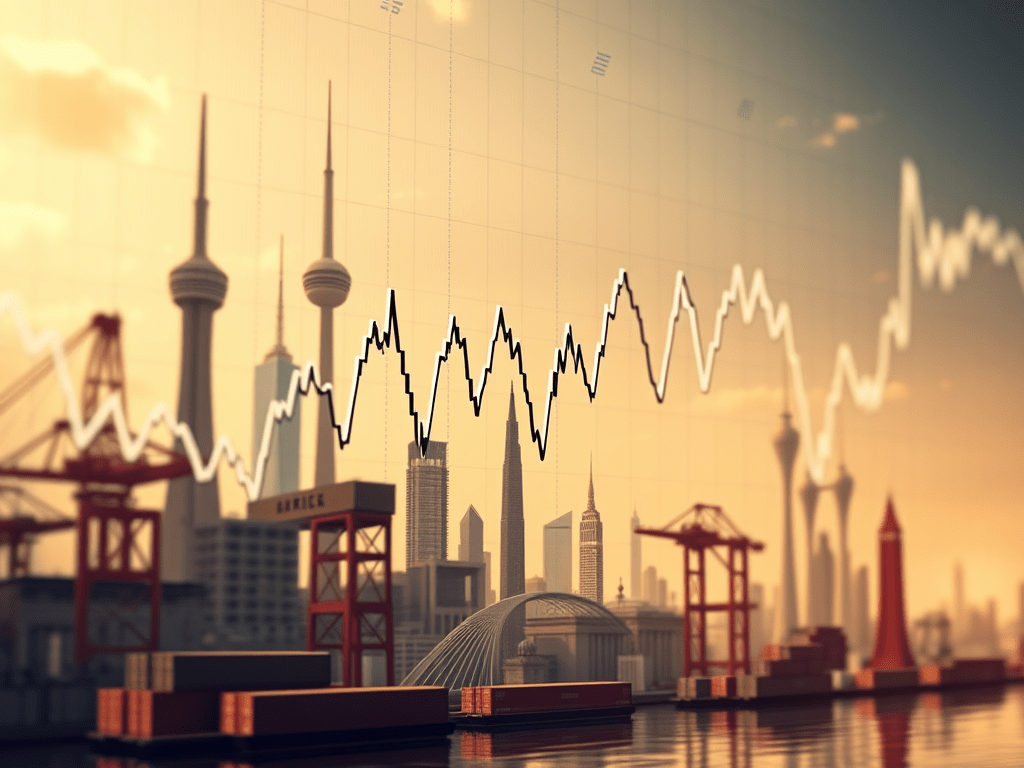
As global headlines continue to highlight rising trade tensions and looming tariffs, it’s natural for investors to feel uncertain. Over the past few weeks, we’ve witnessed increased market volatility, particularly from late February through March, as many clients have expressed concern about how these events could impact their portfolios and long-term goals.
It’s important to remember that market fluctuations—especially those driven by geopolitical or economic headlines—are not new. In fact, short-term corrections are a regular part of investing and often reflect emotional reactions more than fundamental changes in long-term outlook.
The Broader Economic Picture
While headlines may fuel fear, many market analysts remain optimistic about the long-term trajectory of the U.S. economy. According to the Wall Street Journal and CNBC, numerous economists see the current tariff environment as a potential catalyst for renegotiations and improved trade balance, rather than a sign of deeper economic instability.1
In fact, the International Monetary Fund (IMF) has continued to project moderate global growth despite short-term trade disruptions.2 This suggests that while we may experience volatility in the near term, the underlying economic fundamentals remain solid.
What This Means for Your Investments
Periods of market correction—generally defined as a decline of 10% or more from recent highs—can feel unsettling, but they also create opportunities. During these times, we often find attractive entry points for high-quality investments across various sectors and asset classes. For example, areas such as healthcare, infrastructure, and consumer staples continue to demonstrate resilience and positive year-to-date gains.
This reinforces the importance of a diversified portfolio and a long-term strategy. By maintaining discipline during turbulent times, we can potentially benefit from market inefficiencies and position portfolios to take advantage of future growth.
Long-Term Perspective Is Key
Historically, markets have shown remarkable resilience in the face of policy shifts, economic uncertainty, and geopolitical events. According to data from Morningstar, the S&P 500 has recovered from every major downturn over the past 50 years, often reaching new highs within months or a few years.3
While short-term volatility can be uncomfortable, it’s often a normal and necessary part of a healthy market cycle. What matters most is staying focused on your long-term goals, maintaining a well-diversified portfolio, and working with a financial planner who can help you navigate both the noise and the opportunities.
Final Thoughts
At Full Circle Financial Planning, we are committed to helping clients stay informed, prepared, and focused during uncertain times. If you have questions about how current market events may affect your financial plan or would like to review your investment strategy, I encourage you to reach out and schedule a time to talk.
As always, our goal is to help you make thoughtful, informed decisions—regardless of what’s happening in the headlines.
- https://www.cnbc.com ↩︎
- https://www.imf.org/en/Publications/WEO ↩︎
- https://www.mfs.com/content/dam/mfs-enterprise/mfscom/sales-tools/sales-ideas/mfse_resdwn_fly.pdf ↩︎

Leave a comment